

Dancing on the ceiling
Oh, what a feeling.

Building a space for making art presents a paradox. To function as a structure, every aspect of the building must be methodically considered, precisely engineered, and carefully constructed. And yet, once inside its walls, the comfortable seat of pure reason can begin to feel confining. How might you escape the gravity of the predictable? Is there a speculative attitude toward space that might catalyze the transformation of reality? An embrace of the irrational that launches a leap of imagination?
Some of the most precisely engineered and intensely enchanted spaces ever created can be found in that most avant-garde of American art forms—the Hollywood musical. The golden age of the Hollywood musical spanned the studio era roughly from the arrival of sound in The Jazz Singer in1927 to the arrival of television in the mid 1950s. In her indispensable book The Hollywood Musical, Jane Feuer captures the radical spirit of formal boldness:
“Like Cubist paintings, musicals fragment space, multiplying and dividing the human figure into splits, doubles, alter egos. Like post-modern dance, musicals place a premium on an impression of spontaneity, group choreography and a naturalization of technique. Like Godard, musicals employ direct address, multiple and divided characters. Like Fellini, musicals insist on different levels of reality and on the continuity between dream images and waking life.”
I’ve begun using a keyword from this description to open the locked doors of my own imagination. Spontaneity—which I understand as the radicalization of the scripted act to weird space. My favorite musicals build to a kairos point where a passionate dreamer gives into their irrational urges. They swoop up any objects at hand, burst into song, and transform their everyday world through sheer will. It is imagination in motion.
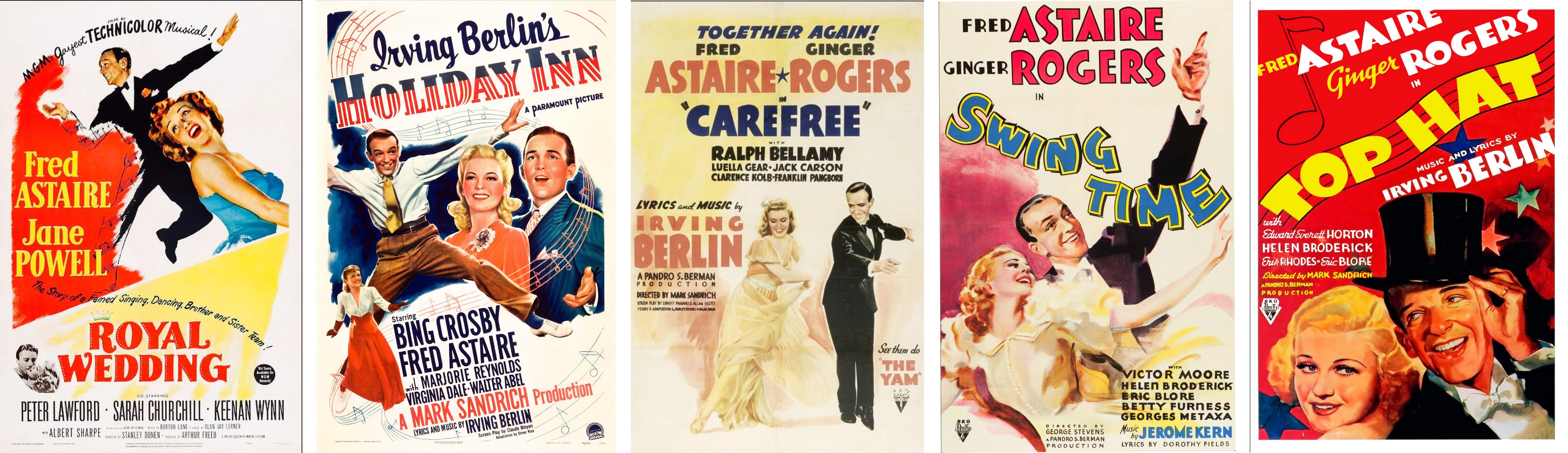
Fred Astaire was the undisputed master of the enchanted prop dance. Long before he danced across the ceiling in Royal Wedding (1951), he did a duet with a piano in Let’s Dance (1950), firecrackers in Holiday Inn, (1942), golf clubs in Carefree (1938), and his own shadow in Swing Time (1936). Film critic David Thompson called Astaire:
“...the most refined human expression of the musical, which is in turn the extreme manifestation of pure cinema: the lifelike presentation of human beings in magical, dreamlike, and imaginary situations.
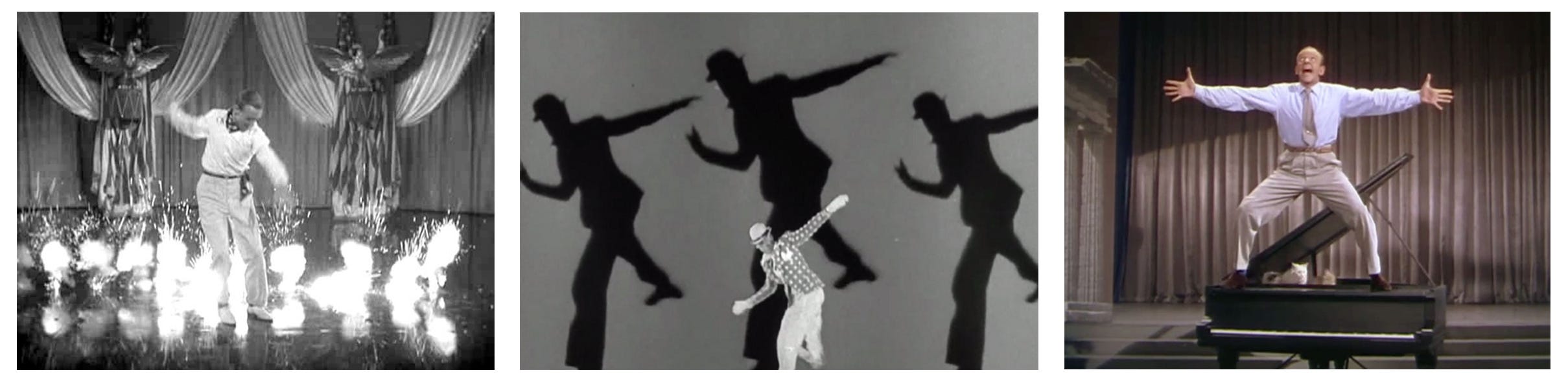
If magick is as Alastair Crowley concisely described “the art and science of causing change to occur in conformity with the will” then Fred Astaire reveals one way to become a magus. Astaire projected effortless spontaneity with such force that he transformed space right in front of your eyes. If this sounds a lot like “magical thinking” then you are right, although who knows to what ends that phrase is being put these days. I like to think of it in generative terms. Where can I learn to become an author of the impossible?
Jerry Lewis was another master of the prop dance with a singular talent for catalyzing delirious space. Just watch him slide across the floor during the opening credits of Cracking Up (1983), his final film as a director.
I look to Astaire and Lewis not as virtuoso performers, but as conjurers who use spontaneity to script their own enchanted experiences. They send my imagination scurrying up walls and sliding across floors. Like Astaire, I want to shimmer in the reflected light of exploding firecrackers. I long to star in my own version of Top Hat and tell Ginger Rogers: “Every once in a while I suddenly find myself dancing.”